

This guide has been written for NDIS participants, families, and support coordinators across Brisbane and southeast Queensland who want to understand three specific and often underused NDIS support categories community access, community nursing, and disability transport and how to find providers capable of delivering them well. The information here is grounded in NDIA funding framework guidelines, NDIS Practice Standards, and the practical realities of accessing these supports across Brisbane’s diverse communities. For advice specific to an individual’s plan, support category eligibility, or plan review, we recommend consulting a qualified support coordinator or contacting the NDIA directly.
Three Supports That Can Transform Daily Life for Brisbane Participants
When families and participants think about NDIS supports, the conversation typically centres on personal care, accommodation, and daily living assistance. These are important but they represent only part of what a well-designed NDIS plan can fund. Three specific support categories are consistently underused by Brisbane participants, not because their value is in doubt but because they are less visible, less discussed, and less frequently included in plans at a level that reflects actual need.
Community access supports enable participants to engage meaningfully with their local community attending activities, building social connections, developing independence skills, and participating in the life of the city around them. Community nursing provides clinical health support in the home or community for participants whose health conditions require more than standard personal care. And disability transport funds the assistance participants need to travel safely and independently to appointments, activities, employment, and community engagement when mainstream transport is not a viable option.
Each of these supports addresses a real and documented gap in the daily lives of many Brisbane participants. Each requires providers with specific expertise to deliver well. And each, when properly funded and professionally delivered, can change what a participant’s daily life looks and feels like in ways that purely task-based personal care cannot.
Community Access: Connecting Participants to Brisbane’s Opportunities
Brisbane is a city of genuine opportunity culturally rich, socially diverse, and active across sport, arts, recreation, employment, and community life. For NDIS participants whose disability-related barriers prevent them from accessing those opportunities without support, community access funding is the mechanism that closes the gap.
Community access funded under the NDIS as Assistance with Social, Economic and Community Participation covers support that enables participants to attend community activities, engage with social groups, access educational or employment-related programs, participate in recreational and cultural activities, and develop the independent living skills that reduce reliance on formal support over time. It is one of the most flexible funding categories within the NDIS, and one of the most capable of producing lasting improvements in participant wellbeing and independence when it is used well.
For Brisbane participants and families who have been researching their options and evaluating what a genuinely capable and goal-oriented community access Brisbane provider brings to this support how they match workers to participants’ interests, how they approach skill-building alongside participation, and how they connect participants to Brisbane’s specific community networks and resources the following qualities consistently distinguish providers that produce genuine outcomes from those that simply accompany participants to activities:
- Goal-aligned activity planning: Activities and participation should be driven by the participant’s own goals not by what is most convenient for the provider. A quality provider takes time to understand what the participant wants to achieve, who they want to connect with, and what skills they want to develop, then builds community access support around those priorities.
- Worker matching on interests and personality: Community access works best when the support worker and participant share genuine rapport. Ask how the provider approaches worker matching not just on availability and geography but on character, communication style, and shared interest areas.
- Skill-building focus: The best community access support builds toward greater independence over time. Providers who track skill development, adjust their support level as the participant’s confidence grows, and actively work toward reducing dependency are delivering real capacity building not just accompanied outings.
- Cultural responsiveness: Brisbane’s communities are culturally diverse, and community access support that connects participants to the cultural communities most meaningful to them not just mainstream activities delivers the strongest social outcomes. Ask how the provider approaches cultural community connections.
Community Nursing: Clinical Support Where Participants Need It
For NDIS participants with significant health conditions those managing chronic wounds, requiring catheter or stoma care, on complex medication regimens, or transitioning from hospital back into community settings clinical nursing support delivered in the home or community is not a supplementary service. It is a clinical necessity.
Community nursing under the NDIS is funded to provide registered nurse-delivered clinical care that goes beyond the scope of standard support worker training. This distinction matters enormously. A support worker, however skilled and dedicated, is not trained or authorised to perform clinical tasks wound assessment and management, catheter or PEG care, medication administration via non-oral routes, clinical observation and escalation. These tasks require registered nursing competency, clinical supervision, and the governance structures that ensure safety when things change.
For participants and families across Brisbane who have been navigating their options and evaluating what genuinely capable community nursing Brisbane providers deliver including their clinical governance structures, how they coordinate with treating GPs and specialists, and what their escalation protocols are when a participant’s health status changes the clinical depth of the provider is the defining evaluation criterion. The following are non-negotiable for safe community nursing delivery:
- Registered nurses with current AHPRA registration: All clinical care must be delivered by appropriately registered professionals. Confirm that the provider’s nursing staff hold current AHPRA registration and that their scope of practice covers the specific clinical tasks the participant requires.
- Individual clinical care plans: Each participant must have a detailed, individually developed clinical care plan produced in collaboration with their GP and specialist team that specifies clinical tasks, monitoring requirements, and escalation thresholds.
- Proactive coordination with treating teams: Quality community nursing does not operate in isolation. The provider must communicate proactively with the participant’s treating GP, specialist, and allied health team sharing clinical observations and ensuring the participant’s healthcare is coordinated rather than fragmented.
- Documented escalation and emergency protocols: Clear, tested protocols for clinical escalation specifying when the nurse contacts emergency services, how the family is notified, and what clinical thresholds trigger escalation are a governance requirement, not an optional quality feature.
Disability Transport: Making Brisbane Accessible for Every Participant
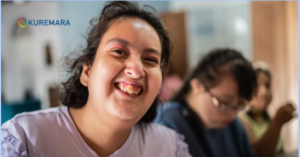
Transport is one of the most significant and most underappreciated barriers to participation for NDIS participants in Brisbane. The city’s large geographic footprint, combined with the limitations of public transport for people with mobility, cognitive, or sensory disabilities, means that many participants are effectively restricted to their immediate environment unable to access appointments, activities, or community engagement without funded transport assistance.
NDIS disability transport funding covers assistance with travel and transport activities for participants whose disability prevents them from using mainstream transport independently. It can fund support worker accompaniment on public transport, purpose-built accessible vehicle transport, and the travel assistance that enables a participant to get to and from the activities and appointments that their NDIS plan is designed to support.
For participants and families across Brisbane who have been evaluating their options and researching what reliable, accessible, and participant-centred disability transport services Brisbane providers offer including vehicle accessibility, driver training in disability awareness, and the reliability of service across the city’s diverse suburbs the operational questions are the most revealing.
Does the provider have vehicles that meet the specific accessibility requirements of the participant? Do drivers hold relevant disability awareness training? Can the provider reliably serve the participant’s suburb at the times required? And do they understand the NDIS transport claiming requirements well enough to ensure every trip is correctly documented and claimable?
Community, Nursing and Transport Supports Across Brisbane
For NDIS participants and families across Brisbane looking for a registered provider with genuine depth across community access, community nursing, and disability transport, Kuremara delivers the professional capability and person-centred values that quality delivery in each of these areas demands.
Kuremara is a registered NDIS provider delivering a comprehensive range of supports across Brisbane and southeast Queensland including community access, community nursing care, disability transport services, Supported Independent Living, Individualised Living Options, In-Home Support, Mental Health Care, Short-Term Accommodation, and Support Coordination. Their approach across every service is grounded in genuine understanding of each participant as an individual their goals, cultural background, clinical needs, and community context.
For community access, Kuremara invests in goal-aligned planning and thoughtful worker matching. For community nursing, they bring registered nurse capability and clinical governance infrastructure. For transport, their disability transport services are delivered with the accessibility, reliability, and disability-specific training that safe, respectful participant transport requires.
Every Brisbane Participant Deserves the Full Scope of Their Plan
Many Brisbane NDIS participants are not accessing the full range of supports their plans could fund. Community access, community nursing, and transport are substantive, meaningful funding categories not supplementary extras. For participants whose daily lives are shaped by the absence of these supports, accessing them through a quality provider changes what is possible.